


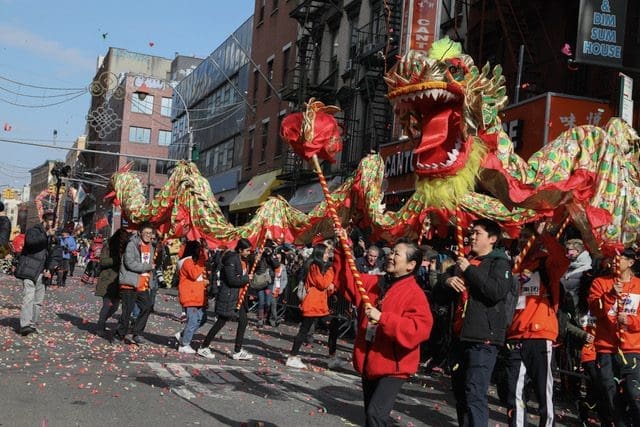
OK — it’s that time of year again when New York City celebrates Chinese New Year, also known as Lunar New Year. And yes, even with the cold February weather, this is actually a great reason to visit NYC.
In 2026, Lunar New Year Day falls on Tuesday, February 17, marking the beginning of the Year of the Fire Horse. Chinatown comes alive with color, sound, food, and centuries-old traditions — making this one of the most vibrant cultural celebrations in the city.
🐉 Main Chinatown Parade & Festival
Saturday, February 7, 2026
⏰ Typically runs from 1:00 PM to around 4:30 PM
Parade Route
-
Begins near Canal Street & Lafayette
-
Travels along Canal Street and Mott Street
-
Ends near the iconic Chatham Square Chinatown Gate
What you’ll see
-
Dragon and lion dance troupes
-
Colorful floats and performers
-
Traditional music, costumes, and cultural displays
⚠️ Street closures and transit detours are common, so plan extra travel time if you’re visiting that day.
🏮 Traditions Village Events (Feb 6–8, 2026)
Throughout the weekend, Chinatown hosts multi-day community events in partnership with local neighborhood organizations and small businesses.
Expect:
-
Open-air markets and specialty vendors
-
Lunar New Year foods and treats
-
Cultural activities like calligraphy, crafts, and demonstrations
-
Local business showcases
-
Evening gatherings, small performances, and community meals
These events are a fantastic way to explore Chinatown beyond the parade route and support long-standing neighborhood businesses.
🔥 Firecracker Ceremony & Cultural Festival
Tuesday, February 17, 2026 (Lunar New Year Day)
📍 Sara D. Roosevelt Park, just north of Chinatown
What’s included
-
Traditional firecracker ceremony to chase away bad spirits
-
Lion and dragon dances
-
Cultural performances celebrating the year ahead
🎟️ Free and open to the public — and one of the most authentic ways to experience Lunar New Year in NYC.
A Brief History of Chinatown in New York
Chinese history in New York dates back to the mid-1800s, when early migrants arrived after the California Gold Rush and railroad construction era. By the late 19th century, a small enclave formed around Mott, Pell, and Doyers Streets, supported by laundries, restaurants, import shops, and family associations.
The Chinese Exclusion Act (1882–1943) severely limited immigration, creating isolated, male-dominated communities. Despite this, Chinatown survived through resilience, entrepreneurship, and strong community networks.
Everything changed after the 1965 Immigration and Nationality Act, which ended race-based quotas. Families reunited, immigration surged, and Chinatown expanded into nearby neighborhoods like the Lower East Side and Little Italy.
Today, New York’s Chinese community extends well beyond Manhattan:
-
Flushing, Queens — one of the largest and most diverse Chinese communities in the world
-
Sunset Park, Brooklyn — a vibrant working-class neighborhood
-
Additional communities in Bensonhurst, Dyker Heights, and beyond
🍜 What to Expect When Visiting Chinatown During Lunar New Year
Food & Shops
Chinatown restaurants and bakeries are overflowing with seasonal favorites:
-
Dumplings (jiaozi) — symbols of wealth and prosperity
-
Nian gao (sweet rice cake) — for good luck
-
Long noodles — representing longevity
-
Street vendors selling red decorations, envelopes, and lucky charms
It’s also a popular time for large family meals, making it ideal for experiencing authentic Chinese cuisine.
Cultural Atmosphere
-
Red lanterns and banners lining the streets
-
Lion dances weaving through crowds
-
A festive mix of locals and visitors celebrating together
📍 Where It All Happens
Most events take place in Manhattan’s Chinatown, especially along:
-
Mott Street
-
Canal Street
-
Bayard Street
-
Sara D. Roosevelt Park
The neighborhood is easily accessible by subway, with multiple lines serving the area.
Experience It With Ben’s Bagel Tours
Chinese New Year is one of the most fascinating times to explore Chinatown — and it’s even better when you know where to go and what you’re seeing.
Ben’s Bagel Tours can take you right into the heart of the celebration on one of his famous walking tours, blending history, culture, and local insight you won’t get on your own.